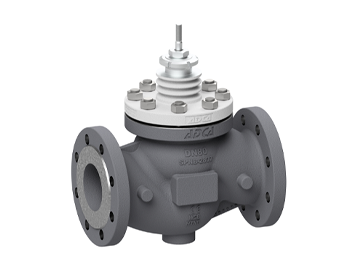


The ADCATrol V16/2 is a series of single seated, two-way globe control valves designed for simple process engineering and industrial applications with non-critical operating conditions. These valves can be assembled with pneumatic, hidraulic or electric actuators, for modulating and shut-off control tasks.
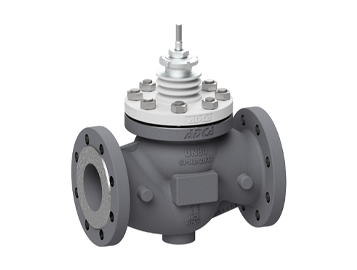
- MATERIALSG iron, carbon steel and stainless steel
- SIZESDN 15 to DN 100
- CONNECTIONSFlanged EN 1092-2 PN 16 Flanged EN 1092-1 PN 16 or PN 40
- FLOW RATE COEFFICIENTS Kvs 2,1 to 160
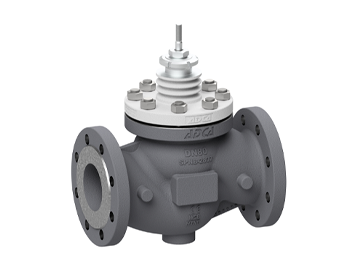
- MATERIALCarbon steel
- SIZES1/2” to 4”
- CONNECTIONSFlanged ASME B16.5 Class 150 or 300
- FLOW RATE COEFFICIENTS Kvs 2,1 to 160
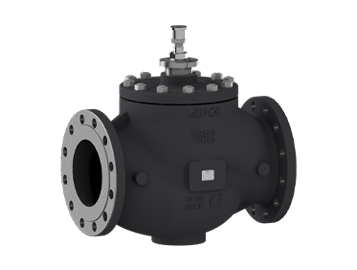
The ADCATrol V16/2 is a series of single seated, two-way globe control valves designed for simple process engineering and industrial applications with non-critical operating conditions. These valves can be assembled with pneumatic, hidraulic or electric actuators, for modulating and shut-off control tasks.
- MATERIALSG iron, carbon steel or stainless steel
- SIZESDN 15 to DN 200
- CONNECTIONSFlanged EN 1092-2 PN 16 Flanged EN 1092-1 PN 16 or PN 40
- FLOW RATE COEFFICIENTS Kvs 0,1 to 630
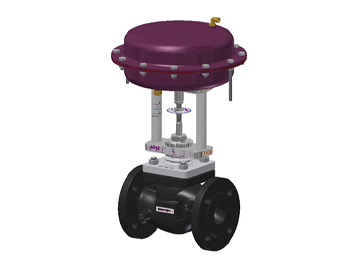
The PV25 On-Off valves are single seated, two-way body constructed with in-line straight connections. The PA pneumatic actuator comprises a rubber diaphragm and multi-springs. Its action can be DA – direct action (air to close) or RA – reverse action (air to open). Their wide application ranges allow the use of this valve with the most common process fluids such as water, superheated water, steam, air, gas and other non corrosive fluids.
- MATERIALSG iron or stainless steel
- SIZESDN 15 to DN 100
- CONNECTIONSFlanged EN PN 16
- FLOW RATE COEFFICIENTS Kvs 3,8 to 136,7
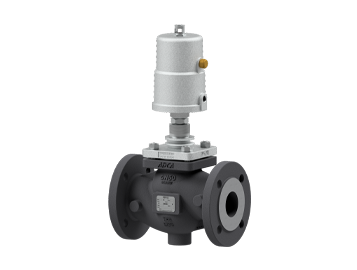
The ADCATrol PPV15 is a series of single seated, two-way pneumatic on/off globe valves with piston actuator. These valves are suitable for use with the most common process fluids such as steam, water, superheated water, air, neutral gases and oils.
- MATERIALSG iron, carbon steel or stainless steel
- SIZESDN 15 to DN 50
- CONNECTIONSPPV15G – Flanged EN 1092-2 PN 16 PPV15S and PPV15i – Flanged EN 1092-1 PN 16 or PN 40
- FLOW RATE COEFFICIENTS Kvs 5,1 to 40
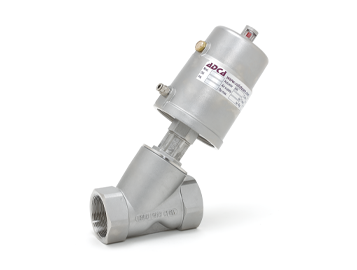
The PAV series angle seat interception valves are designed for use with steam, gases and other fluids used in the process industry. They are an efficient solution to fluid interception in applications where flexibility and affordable cost are required.
- MATERIALStainless steel
- SIZES1/2” to 2”
- CONNECTIONSFemale threaded ISO 7 Rp
- FLOW RATE COEFFICIENTS Kvs 4,8 to 52,6
- RATING PN 16

The PV40 control valves are single seated, two-way body constructed with in-line straight connections. The PA pneumatic actuator is rubber diaphragm and multi-springs. Its action can be DA – direct action (air to close) or RA – reverse action (air to open). The PV40 valves have been designed to ensure accurate control in any process condition. Their wide application ranges allow the use of this valve with the most common process fluids such as water, superheated water, steam, air, gas and other non-corrosive fluids.
- MATERIALCarbon steel or stainless steel
- SIZESDN 15 to DN 50
- CONNECTIONSFlanged EN PN 40 Flanged ASME Class 150 or 300
- FLOW RATE COEFFICIENTS Kvs 3,8 to 40,1

The ADCATrol V253 is a series of three-way globe control valves designed to ensure accurate control in mixing or diverting general service applications.These valves can be assembled with pneumatic, hydraulic or electric actuators and used with the most common process fluids such as water, superheated water, thermal oil, steam, air, gas and other non corrosive fluids.
- MATERIALSG Iron
- SIZESDN 15 to DN 150
- CONNECTIONSFlanged EN PN 16 or PN 25
- FLOW RATE COEFFICIENTS Kvs 4 to 330
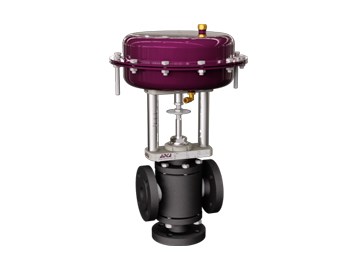
The PV403 control valves are three-way valve body for mixing service. The PA pneumatic actuator is rubber diaphragm and multi-springs. Its action can be DA – direct action (air to close) or RA – reverse action (air to open). The V403 valves have been designed to assure an accurate control in any process condition. Their wide application ranges allow the use of this valve with the most common process fluids such as water, superheated water, diathermic oil, steam, air, gas and other non corrosive fluids.
- MATERIALCarbon steel or stainless steel
- SIZESDN 15 to DN 50
- CONNECTIONSFlanged EN PN 16 or PN 40 Flanged ASME Class 150 or 300
- FLOW RATE COEFFICIENTS Kvs 4 to 40

The VPA26/2 series of blowdown valves are specially designed for application on steam boilers, to remove sludge sediments which naturally settle on the bottom of the boiler. These intermittent valves operate manually or automatically with timed control. Available with diaphragm actuator and/or manual operation lever.
- MATERIALCarbon steel or stainless steel
- SIZES3/4” to 2” – DN 20 to DN 50
- CONNECTIONSFlanged EN PN 40 Flanged ASME Class 300
- FLOW RATE COEFFICIENTS Kvs 6,3 or 16

The ADCATrol VPC26 is specially designed for TDS (Total Dissolved Solids) control applications in steam boilers.
- MATERIALCarbon steel or stainless steel
- SIZES1/2” to 11/2” – DN 15 to DN 40
- CONNECTIONSFlanged EN PN 40 Flanged ASME Class 300
- FLOW RATE COEFFICIENTS Kvs 1,2 to 2,5

The ADCATrol OVF40 is a series of single seated, two-way overflow valves with inline connections. These valves are mainly used in closed loop systems to ensure that a minimum flow is kept in the event that all connected consumers are in a low load condition or have simply shut down. In these scenarios, the valve will prevent problems such as pressure surges, pump cavitation and overheating.
- MATERIALCarbon steel or stainless steel
- SIZESDN 15 to DN 80
- CONNECTIONSFlanged EN PN 16 or PN 40
- FLOW RATE COEFFICIENTS Kvs 5,2 to 89,7

PA series pneumatic multi-spring actuators with rolling diaphragm, offering decreased hysterisis and good linearity throughout the operating range. Available in air to close and air to open versions, for modulating and on/off services.
- MATERIALMild steel or stainless steel
- SIZES100 to 2400 cm2
- MAX. AIR SUPPLYUp to 6 bar
- RATED STROKE Up to 60 mm
- THRUST 200 N to 120 kN

PA series pneumatic multi-spring actuators with rolling diaphragm, offering decreased hysterisis and good linearity throughout the operating range. Available in air to close and air to open versions, for modulating and on/off services.
- MATERIALMild steel or stainless steel
- SIZES140 a 700 cm2
- MAX. AIR SUPPLYUp to 6 bar
- RATED STROKE Up to 30 mm
- THRUST 280 N to 17,5 kN

Electric linear actuators EL series for modulating and open-close duty of control and process technology to operate control valves. The self-locking stem/stem nut is driven by an electric motor via a gearing. Load and limit switches define the stops for the end positions.
- RATED STROKEUp to 100 mm
- SUPPLY VOLTAGES24 V, 115 V, 230 V, 400 V AC 50/60Hz 24 V DC
- IP RATINGIP 43 / IP 65
- THRUST 1,2 to 25 kN

Electric linear actuators ELR series for modulating and open-close duty of control and process technology to operate control valves. The self-locking stem/stem nut is driven by an electric motor via a gearing. Load and limit switches define the stops for the end positions. In case of power failure, the electric linear actuator runs spring-driven into the respective fail-safe position.
- RATED STROKEUp to 46 mm
- SUPPLY VOLTAGES24 V, 115 V, 230 V, 400 V AC 50/60Hz 24 V DC
- IP RATINGIP 54
- THRUST ≥ 0,9 to ≥ 2,2 kN (closed) ≤ 4,0 to ≤ 5,3 kN (open)
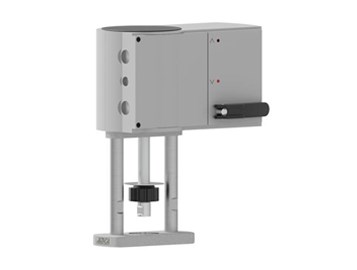
The AVM234S / AVF234S valve actuators offer automatic adaptation to the stroke of the valve, precision activation and high energy efficiency with minimal operating noise. Ideal for use with any DSH series direct steam injection humidifier and in TDS (Total Dissolved Solids) control systems VCP blowdown valves.
- RATED STROKEUp to 49 mm
- SUPPLY VOLTAGES24 V, 115 V, 230 V AC 50/60Hz 24 V DC
- IP RATINGIP 66
- THRUST 2 or 2,5 kN

The TR valves series were designed for direct-acting temperature control systems where the valve closes on temperature rise. They are single seated, in order to ensure an excellent tightness and are intended to be coupled with the thermostat models T.205 and T.405.

- MATERIALCarbon steel
- SIZES1/2” to 1”
- CONNECTIONSFemale threaded ISO 7 Rp
- CLOSING FORCE Up to 400 N
- CAPILLARY LENGHTS 3 m as standard
- RATING PN 40
- THERMOSTAT RANGES 0 to 160 ºC

- MATERIALCarbon steel or stainless steel
- SIZESDN 15 to DN 25
- CONNECTIONSFlanged EN PN 40
- CLOSING FORCE Up to 400 N
- CAPILLARY LENGHTS 3 m as standard
- RATING PN 40
- THERMOSTAT RANGES 0 to 160 ºC
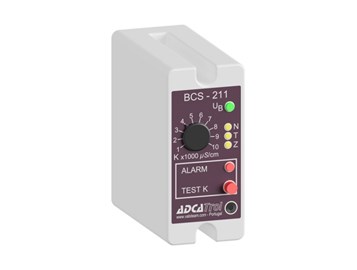
The ADCATROL BCS-211 controller is part of the dissolved solids (TDS) control system used in steam boilers. This system is composed of a SPS series conductivity probe, a BCS-211 controller, a VPC series blowdown valve and, in case of need, a UC-820 universal process controller for PID control.
- SUPPLY VOLTAGES230 V AC +/- 15%, 50/60 Hz
- DIMENSIONS106 x 51 x 112 mm
- IP RATINGIP 40
- CONDUCTIVITY RANGE BCS-211 – 0 to 10000 µS/cm BCS-211B – 0 to 1000 µS/cm

The ADCATrol BCS220 is a blowdown controller specially designed for use with steam boilers. The device takes care of both TDS and intermittent blowdown controls. TDS (Total Dissolved Solids) is controlled through measurement of the boiler water electrical conductivity and intermittent control is performed via a blowdown timer. The device utilizes a clear multifunction LCD to display measured conductivity, temperature, operational alarm status and provide an intuitive user interface. The device is IP 66 rated NEMA 4X and can be panel, surface/wall and pipe mounted.
- SUPPLY VOLTAGESBCS220 – 90 to 265 V AC BCS220-LV – 12 to 30 V DC
- DIMENSIONS150 x 161 x 119
- IP RATINGIP 66 NEMA 4X

The PCS1 series pressure transmitters are suitable for all industrial applications, specially in severe conditions where high temperatures, pressure peaks and high levels of shock and vibrations are present. They are extremely robust and reliable, thanks to their state of the art SMD electronics and compact all stainless steel construction.
- SIZES AND CONNECTIONSMale threaded ISO 228 G 1/4''
- PRESSURE RANGES0 to 6 / 0 to 10 / 0 to 16 0 to 25 / 0 to 40 / 0 to 100 0 to 250 / 0 to 400 / 0 to 600
- ACCURACY < ±0,5% FS
- RESPONSE TIME < 1 ms
- IP RATINGIP 65 / IP 67
- OUTPUT4 to 20 mA (2-wire)

The ADCATrol SPS21 conductivity probe is typically used in steam applications to measure the conductivity of superheated boiler water, condensate or feedwater. The probe is used in conjunction with an ADCATrol BCS controller and a VPC series TDS blowdown control valve.
- SIZES AND CONNECTIONSMale threaded ISO 7 R 1/2''
- MAX. OPERATING PRESSURE32 bar
- MAX. OPERATING TEMPERATURE239 ºC
- IP RATINGIP 65

The ADCATrol SPS33 conductivity probe is typically used in steam applications to measure the conductivity of superheated boiler water, condensate or feedwater. The probe is used in conjunction with an ADCATrol BCS controller and a VPC series TDS blowdown control valve.
- SIZES AND CONNECTIONSMale threaded ISO 7 R 1/2''
- MAX. OPERATING PRESSURE32 bar
- MAX. OPERATING TEMPERATURE239 ºC
- IP RATINGIP 65

The TRPT1 Pt100 resistance temperature sensors are specially designed for general industrial use. The sensing element is an RTD three wire device according to EN 60751 Class A.
- SIZES AND CONNECTIONSMale thread ISO 7/1 Rp (BS21) - 1/2''
- IP RATINGIP 66 (KNE enclosure)
- OUTPUT3-wire RTD or 4 to 20 mA (2-wire)

3/2 way solenoid valves are available as single station units and they are designed for use with compressed air, mainly applied where on/ off control is required with pneumatic actuators.
- MATERIALAlluminium alloy
- SIZES AND CONNECTIONSFemale threaded ISO 7 Rp 1/4''
- MAX. OPERATING PRESSURE8 bar
- SUPPLY VOLTAGES220 V AC - 110 V AC - 24 V DC - 24 V AC
- IP RATINGIP 65

The UD-720 is a programmable digital panel display used for the measurement of standard sensor and analog signals applied in automation. It is ideally suited for use with our range of instrumentation such as pressure transmitters, temperature probes and TDS controllers.
- SUPPLY VOLTAGES24 V AC/DC - 85 to 253 V AC/DC
- DIMENSIONS93 x 96 x 48 mm
- IP RATINGIP 65
- COMMUNICATION PROTOCOLMODBUS RTU
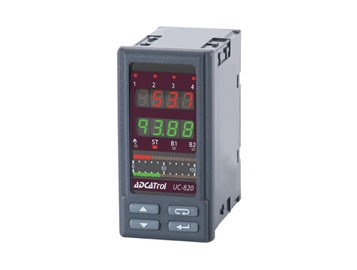
The UC-820 is a digital universal controller used in the automation of industrial processes. It is ideally suited for use with our range of instrumentation, electric and pneumatic control valves and other electrical equipment.
- SUPPLY VOLTAGES20 to 40 V AC/DC - 85 to 253 V AC/DC
- DIMENSIONS101 x 48 x 96 mm
- IP RATINGIP 65
- COMMUNICATION PROTOCOLMODBUS RTU
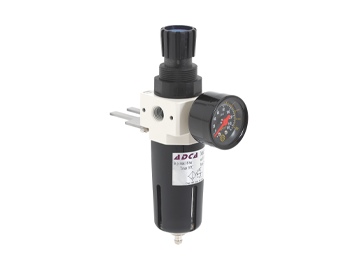
The P10 air filter regulators are used to remove both solid and liquid impurities from the air and to regulate the output pressure to the required value for general purpose pneumatic systems. The filter bowl is transparent, allowing easy monitoring of the condensate level.
- MATERIALAluminium and polycarbonate
- SIZES AND CONNECTIONSFemale threaded ISO 7 Rp 1/4''
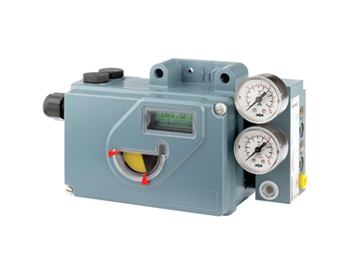
The microprocessor-controlled positioner PI991 is designed to control pneumatic valve actuators and can be operated locally or by means of control systems. The advanced diagnostic can be partially shown on the local LCD of the positioner or fully on a PC or a DCS workstation with a DTM based software (VALcare or Valve Monitor). The positioner is available with different communication protocols.
- IP RATINGIP 66 - NEMA 4X
- AVAILABLE APPROVALSATEX, SIL3, FM, CSA and IECEx
- COMMUNICATION4 to 20 mA, HART, Profibus PA, Foxcom or FOUNDATION Fieldbus-H1
- OPERATING TEMPERATURE-40 to 80 ºC

The ADCATROL PP981 positioner requires an input signal of 0,2÷1bar (3÷15psi) for the proportional control actuator. The positioner compares the output signal from a controller with the position feedback and varies a pneumatic output signal to the actuator accordingly. The actuator position is therefore guaranteed for any controller output signal and the effects of varying differential pressure.
- IP RATINGIP 54 (IP 65 on request)
- AVAILABLE APPROVALSATEX
- COMMUNICATION0,2 to 1 bar (3 to 15 psi)
- OPERATING TEMPERATURE-40 to 80 ºC
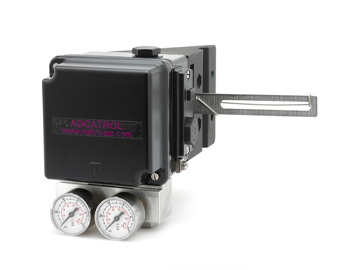
The ADCATrol PE986 positioner requires an input signal of 4÷20 mA for the proportional control actuator. The positioner compares the output signal from a controller with the position feedback and varies a pneumatic output signal to the actuator accordingly. The actuator position is therefore guaranteed for any controller output signal and the effects of varying differential pressure.
- IP RATINGIP 54 (IP 65 on request)
- AVAILABLE APPROVALSATEX
- COMMUNICATION4 to 20 mA
- OPERATING TEMPERATURE-40 to 80 ºC
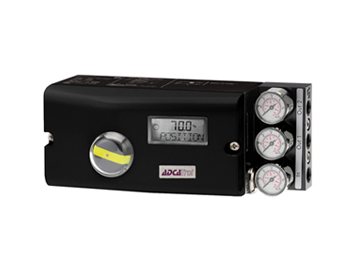
The ADCATrol TZIDC is an electronically configurable positioner with communication capabilities designed for mounting to pneumatic linear or rotary actuators. It features a small and compact design, a modular construction, and an excellent cost-performance ratio. Fully automatic determination of the control parameters and adaptation to the final control element yield considerable time savings and optimal control behavior.
- IP RATINGIP 65 (IP 66 on request) NEMA 4X
- AVAILABLE APPROVALSATEX, SIL3, FM, CSA, GOST and IECEx
- COMMUNICATION4 to 20 mA, HART, Profibus PA or FOUNDATION Fieldbus-H1span>
- OPERATING TEMPERATURE-40 to 85 ºC